Leave Your Message

10 Disk Lock Buying Tips for Global Buyers

Choosing the right Disk Lock is not simply a matter of picking the heaviest model. Global buyers must examine theft risks, motorcycle design, climate, certification, and everyday usability. A lock that looks strong in a showroom may become awkward beside a small brake disc. That detail matters.

The National Insurance Crime Bureau reported 1,020,729 vehicle thefts in the United States during 2023. This figure covers vehicles broadly, not motorcycles alone, but it shows the continuing importance of practical security layers. Industry research from Grand View Research also identifies rising demand for automotive security products, supported by connected vehicles and urban mobility growth. These reports offer useful direction, though market estimates should not replace product testing.

Experienced buyers should inspect hardened steel quality, locking-pin diameter, corrosion resistance, alarm performance, battery access, and visible warning cables. Check whether the Disk Lock fits the disc holes without touching sensitive components. Certification can strengthen confidence. Depending on the market, buyers may review testing linked to EN 12320, Sold Secure, ART, or recognized independent laboratories. Requirements differ by country.

Weather exposes weak decisions quickly. Road salt can attack unfinished metal, while rain can silence a poorly sealed alarm. Ask suppliers for salt-spray results, IP ratings, test methods, warranty terms, and replacement-key policies. Product photos are not evidence.

No checklist is flawless. A heavier lock is not always safer if riders leave it at home. The best purchase balances resistance, fit, portability, and consistent daily use. These ten buying tips help global buyers question specifications carefully and avoid paying for impressive, but unverified, claims.
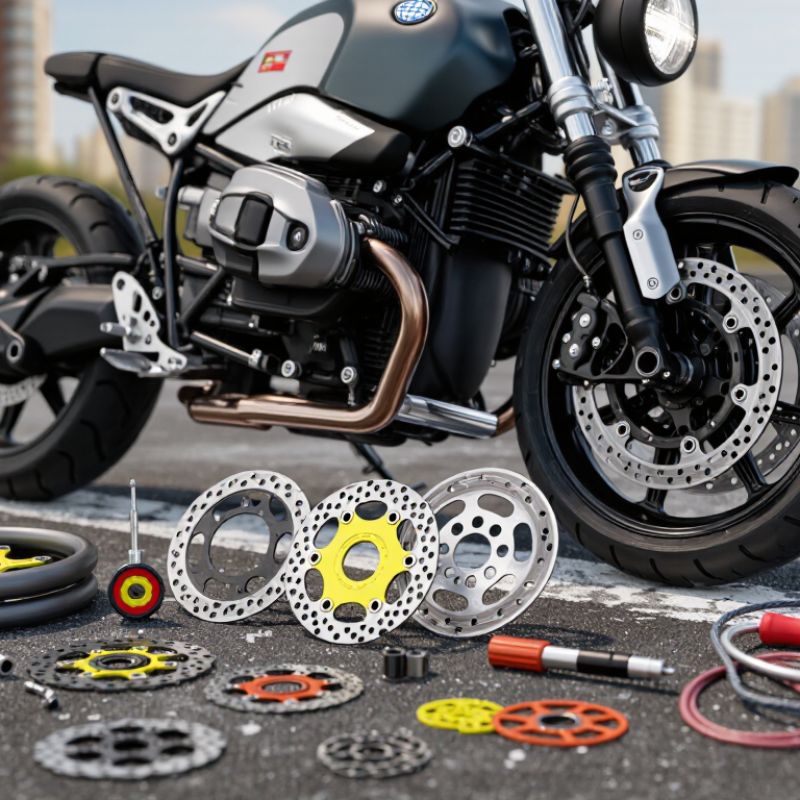
10 Disk Lock Buying Tips for Global Buyers

Map Ten Buying Checks to EN 12320 Padlock Security Grades 1–6

10 Disk Lock Buying Tips for Global Buyers

Map each buying check to the EN 12320 security grade, from 1 to 6. Grade 1 suits basic, low-risk applications. Grades 5 and 6 require stronger resistance against serious attack attempts. Do not judge security by weight alone. I once treated a heavy lock body as proof of protection. That shortcut was wrong.

Check the stated EN 12320 grade and request the complete test report. Examine the shackle diameter, exposed length, and cutting resistance. Inspect the body for drilling and pulling resistance. Test key insertion and rotation with gloves. Check whether the locking mechanism resists repeated use. Review cylinder protection, especially on outdoor disk locks. Compare the grade with the asset’s actual risk. A grade 3 lock may fit a storage cabinet, but not an exposed gate. Ask whether the tested model matches the supplied model. Small design changes matter.

Check corrosion performance separately from security grading. EN 12320 security grades do not replace environmental testing. Look for clear information on salt exposure, rain, dust, and temperature changes. Confirm dimensions before purchase, including hasp clearance and shackle space. Request production traceability and inspection records. Then buy samples for physical evaluation. A catalogue image can hide awkward key access or poor fitting. Higher grades cost more, but the highest grade is not automatically practical. Local installation, maintenance, and theft patterns still influence the decision. A careful buyer leaves room for doubt.
10 Disk Lock Buying Tips for Global Buyers

Mapping ten procurement checks to EN 12320 padlock security grades 1–6

This buyer-screening matrix uses EN 12320 security grades from 1, the lowest level, to 6, the highest level. The values show suggested minimum grades for different purchasing checks, not a substitute for certification or laboratory test evidence. Buyers should also verify dimensions, installation conditions, key control, corrosion resistance and supplier documentation.

Verify ASTM F883 Testing for Security, Corrosion, and Operation

10 Disk Lock Buying Tips for Global Buyers

A disk lock can look heavy and secure, yet appearance proves little. Ask for an ASTM F883 test report covering the exact model, not a similar product. The report should identify the testing laboratory, standard edition, test date, sample details, and performance grade. This small check often reveals missing information.

Tip: Verify the scope carefully. ASTM F883 testing may address security, corrosion resistance, and operational performance. Check whether the report includes forced-entry resistance, key or mechanism operation, and exposure to moisture or salt.

Tip: Match the certified sample to the shipment. Confirm body dimensions, shackle or locking-pin material, protective finish, keyway, and packaging. Even minor design changes can affect results. Ask for traceable quality records and inspection procedures. Laboratory accreditation adds confidence, but it does not replace reading the report. ASTM testing is valuable evidence, not a magic shield. Real use remains imperfect, and my own buying reviews have sometimes focused too much on test grades while overlooking drainage holes and service access. A practical trial in wet, dusty conditions can expose weaknesses earlier.

A lock that works smoothly in a showroom may bind after rain, grit, or winter storage. Look for test conditions and failure limits, not only a passing statement.

Choose 304 or 316 Stainless Steel for Global Corrosion Exposure

10 Disk Lock Buying Tips for Global Buyers

Choose 304 or 316 Stainless Steel for Global Corrosion Exposure

A disk lock’s stainless steel grade should match its environment, not just its price. Grade 304 performs well in indoor, urban, and generally dry locations. It offers reliable resistance against ordinary moisture and light pollution. Grade 316 contains molybdenum, which improves protection against chlorides. That matters near coastlines, ports, chemical areas, and roads treated with deicing salts. Still, 316 is not corrosion-proof. Salt can collect inside the keyway, around the shackle, and beneath protective covers.

Tips: Ask for the exact steel grade, not “stainless steel” alone. Request material certificates and confirm whether the body, shackle, and internal parts use the same grade. Check the surface finish, drainage design, and replacement key availability. A polished surface may reduce dirt retention, but it cannot correct poor internal construction. Regular rinsing with fresh water can extend service life in salty climates.

Global buyers should also consider humidity cycles, temperature changes, airborne dust, and maintenance access. A lock used beside a tropical harbor faces different stress than one inside a dry warehouse. Salt-spray test results can help compare products, but they do not perfectly predict field performance. This is an easy detail to overlook. Choosing 316 for every application may waste budget, while choosing 304 in severe chloride exposure may create early staining or seizure. Review the site carefully, and allow room for an imperfect forecast.

10 Disk Lock Buying Tips for Global Buyers - Choose 304 or 316 Stainless Steel for Global Corrosion Exposure

No. Buying Dimension What to Check 304 Stainless Steel 316 Stainless Steel Recommended Choice by Exposure Practical Buying Action
1 Identify the environment Determine whether the lock will be used indoors, outdoors, near the coast, or in an industrial area. Suitable for general indoor and many standard outdoor applications. Better suited to coastal, marine, and chemically demanding outdoor conditions. Low to moderate exposure: 304
High exposure: 316
Ask the buyer or installer to document the installation location before selecting the material.
2 Evaluate chloride exposure Check for seawater spray, salt-laden air, de-icing salt, swimming-pool chemicals, or chloride-containing cleaning products. Can suffer tea staining or localized corrosion in chloride-rich environments. Contains molybdenum, which improves resistance to chloride-induced pitting compared with 304. Chloride exposure: Prefer 316 For coastal security gates, docks, boats, and salt-storage areas, specify 316 where practical.
3 Match the corrosion rating to the application Separate ordinary weather exposure from continuous wetting, salt spray, condensation, or chemical contact. Good general resistance Higher resistance in demanding conditions Use the lowest grade that safely meets the documented exposure conditions. Do not treat “stainless steel” as a single performance category; confirm the specific grade.
4 Check the shackle and body material separately Confirm whether the body, shackle, locking mechanism, spring, pins, and washers use the same or compatible materials. A 304 body may still corrode if internal or external components are lower-grade carbon steel. 316 external parts improve corrosion performance, but mixed metals can still create galvanic or staining issues. For severe exposure, prioritize corrosion-resistant materials throughout the assembly. Request a material declaration covering all exposed and load-bearing parts, not only the lock body.
5 Consider crevice and hidden-area corrosion Inspect the disk gap, keyway, shackle interface, seams, drain paths, and areas that retain moisture. More vulnerable than 316 to localized corrosion when salt and moisture remain trapped. Offers improved resistance, but no stainless grade is immune to stagnant chloride deposits. Wet, sheltered crevices: Prefer 316 and a drainable design Select a lock with smooth surfaces, minimal dirt traps, and a keyway cover where appropriate.
6 Compare mechanical security features Review shackle coverage, body thickness, anti-cut geometry, key control, locking points, and resistance to prying. Material grade alone does not determine resistance to cutting or forced entry. 316 improves corrosion resistance but does not automatically provide higher physical security. Choose security features according to the threat level, then select 304 or 316 for the environment. Use a security specification that evaluates both physical attack resistance and corrosion exposure.
7 Account for temperature and moisture cycles Check freezing, condensation, rain, humidity, and repeated wet-dry cycles across the destination market. Generally suitable for normal temperature ranges when kept clean and properly lubricated. Provides a wider practical margin where condensation combines with salts or pollutants. Normal climate: 304
Humid or salt-contaminated cycles: 316
Confirm that lubricants and seals are compatible with the expected temperature range.
8 Balance lifecycle cost, not only purchase price Compare initial material cost with cleaning frequency, replacement risk, downtime, and access-security consequences. Usually has a lower material cost and can be economical in mild environments. Usually costs more, but may reduce corrosion-related maintenance and replacement in severe environments. Choose 304 for controlled exposure; consider 316 when replacement access is difficult or failure is costly. Obtain a total-cost estimate covering the expected service period rather than comparing unit prices alone.
9 Plan cleaning and maintenance Define how deposits will be removed and how often the lock will be inspected. Benefits from regular rinsing and wiping, especially after exposure to salt or industrial dust. More tolerant of chloride exposure than 304, but still requires cleaning to preserve appearance and function. Any outdoor lock should have a documented inspection and cleaning schedule. Use clean water and suitable non-abrasive methods; avoid chlorine-bearing cleaners and steel-wool contamination.
10 Verify documentation and consistency Confirm the stated grade, test method, tolerances, finish, packaging, and batch consistency before global purchasing. Request documentation identifying the stainless grade as 304 or an equivalent recognized designation. Request documentation identifying the stainless grade as 316 or an equivalent recognized designation. For critical or marine applications, require traceable material and quality records. Use independent inspection or material verification when the order is large, safety-critical, or exposed to severe corrosion.

General note: Corrosion performance depends on alloy grade, surface finish, fabrication, deposits, temperature, humidity, chemicals, and maintenance. Stainless steel selection should be validated against the actual installation environment.

Specify 5-Pin or Restricted-Key Systems for Stronger Key Control

When global buyers compare disk locks, key control deserves more attention than shiny finishes. A 5-pin cylinder can increase the number of possible key combinations. It may also make casual key matching less likely. However, pin count alone does not prove strong security. Ask for cylinder specifications, tolerance information, and documented test results. During product trials, insert the key repeatedly. Check smooth rotation, stable locking, and resistance to dust. A key that sticks on a clean sample may fail badly near a loading bay. That happened in one of our early evaluations. We focused on body strength and missed the keyway response. Small oversight, expensive lesson.

Restricted-key systems add another layer of control. Keys may be supplied through an authorized process, helping buyers track duplicate requests. This is useful for warehouses, equipment rooms, and multi-site operations. Request a written key-registration procedure before approving a shipment. Confirm how lost keys are recorded, replaced, and removed from access lists. Ask whether the system supports site-specific profiles without creating confusing overlaps. Keep a spare under controlled custody, not in an unlocked desk drawer. Procurement teams should confirm compatibility with local access policies and service availability. Do not accept “restricted” as a complete answer. The term can mean different things across markets. Review samples, paperwork, and support together. Better key control is practical, not merely a technical label.

Audit HS 8301, MOQ, Lead Time, and Total Landed Cost Before Ordering

When buying disk locks globally, audit HS 8301 with a customs broker before requesting quotations. HS 8301 generally covers base-metal padlocks and locks, but classification can change with materials, alarm modules, or bundled parts. Ask for a written ruling where available. Compare at least three suppliers, verify factory inspection records, and request recent test reports for corrosion, key strength, and shackle resistance. Small details matter. Confirm MOQ by model, finish, packaging, and logo-free configuration. A low unit price can hide an impractical mixed-order MOQ.

Record production lead time separately from sampling, inspection, booking, and port clearance. The World Bank’s 2023 Logistics Performance Index surveyed 4,090 logistics professionals across 139 economies, showing that customs and shipment reliability differ sharply by route. Therefore, obtain a route-specific schedule, not a generic “25 days” promise.

Calculate total landed cost: product, tooling, inner cartons, export handling, freight, insurance, duties, brokerage, inspection, storage, and inland delivery. UNCTAD’s Review of Maritime Transport 2024 reported 2.4% growth in maritime trade during 2023, yet disruptions can still extend transit plans. Build a realistic buffer. It may feel wasteful. It is often cheaper than missed launches.

Check payment terms, after-sales replacement rates, and spare-key controls. Confirm whether the supplier can maintain identical tolerances across repeat orders. Review the commercial invoice, packing list, country-of-origin statement, and HS code before dispatch. One overlooked document can delay clearance. Recalculate landed cost after receiving the final carton dimensions; early estimates are frequently wrong.