Leave Your Message

How to Choose the Best Bike Cycle Lock in 2026?

Choosing the best Bike Cycle Lock in 2026 requires more than comparing prices or shiny security ratings. Your riding habits matter. A commuter leaving a bicycle beside a busy station needs different protection from a weekend rider stopping outside a quiet café.

Sheldon Brown, a respected bicycle mechanic and technical writer, offered a useful warning: “No lock is unbreakable.” That short statement still matters. A lock should delay theft, discourage opportunistic attempts, and fit your daily routine. Even the strongest model becomes ineffective when left at home.

Look closely at the lock’s construction. Hardened steel shackles resist cutting better than thin cable. Folding locks offer compact storage, while chain locks provide flexible attachment around wide posts. A heavy U-lock may protect well, but carrying it for ten miles can become frustrating. That practical weakness is easy to overlook.

Security ratings can help, but they are not universal guarantees. Check how each brand tests cutting, leverage, drilling, and weather exposure. Consider the locking mechanism, key replacement policy, mounting bracket, and warranty. A lock exposed to winter rain may need regular lubrication. Small maintenance habits matter.

The perfect choice does not exist. I once favored maximum weight over convenience, and that decision reduced how often I carried the lock. That was a mistake. This guide compares real-world security, portability, durability, and value. It also questions marketing claims, because a confident label cannot replace careful daily use.
How to Choose the Best Bike Cycle Lock in 2026?

Understanding Bike Lock Types and Their Security Levels

How to Choose the Best Bike Cycle Lock in 2026?

Choosing a bicycle lock starts with understanding the threat, not the appearance. The Office for National Statistics recorded about 77,000 bicycle thefts in England and Wales during the year ending March 2024.

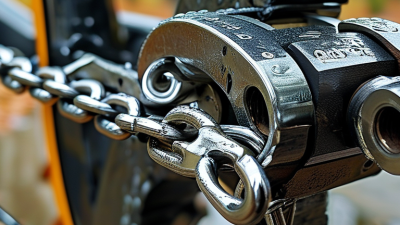
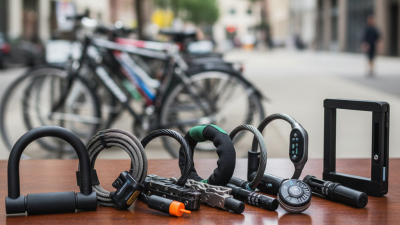
A lightweight cable lock may deter casual interference, but it offers limited resistance against cutting tools. Folding locks provide better portability and moderate protection. U-locks usually offer stronger resistance because their hardened shackles leave less space for leverage. Chain locks can protect large frames, though heavy chains become unpleasant during daily commuting.

Security levels matter more than marketing language.

Independent testing schemes commonly classify locks through graded resistance levels, such as Bronze, Silver, Gold, and Diamond. Higher grades generally indicate longer resistance during controlled attacks. However, certification is not a guarantee in every street.

The surrounding object, locking position, and tool access still matter. Check whether the lock secures both the frame and wheel to an immovable stand. Avoid leaving room for a bottle jack or large cutter.

My practical choice changes with location.

For a short stop in a busy area, a compact U-lock may be enough. Overnight parking requires a higher-rated lock, or two different lock types. That adds weight. It also adds friction.

I once carried a heavy chain for weeks and eventually stopped using it consistently. The most secure lock is useless when left at home.

Review independent test results, inspect the lock’s dimensions, and match its security level to the theft risk around your actual parking places.
Matching Lock Features to Your Bike, Budget, and Riding Habits

How to Choose the Best Bike Cycle Lock in 2026?

Matching Lock Features to Your Bike, Budget, and Riding Habits

A secure lock should match your bicycle, parking routine, and local theft risk. For a lightweight commuter bike, a compact folding lock may balance protection and portability. It is convenient. However, thin cables often provide limited resistance against cutting tools. For a costly bicycle parked outdoors, choose a hardened chain or rigid shackle with a strong independent security rating. Larger locks usually weigh more, so test the carrying method before buying.

Your budget should cover more than the lock itself. Consider replacement keys, mounting hardware, and weather resistance. If you park near a busy station, prioritize strong materials and a design that secures both the frame and wheel.

A realistic setup uses two different locking methods when the area presents higher risk. Check the lock’s measured weight, shackle clearance, and key mechanism. Marketing claims are not enough. Rain can seize poor-quality mechanisms.

Riding habits often decide the best choice. If you leave your bicycle outside for hours, select maximum security over minimal weight. If you carry the lock on every ride, a slightly lighter model may encourage consistent use. Keep it raised. Do not let the lock rest on the ground, where leverage becomes easier. Test the key with cold or wet hands before relying on it. A lock that feels awkward may remain unused. I have made that mistake. Practical security depends on daily behavior, not specifications alone.

Evaluating Materials, Design, Weight, and Portability

How to Choose the Best Bike Cycle Lock in 2026?

A dependable cycle lock begins with its material. Hardened steel usually resists cutting better than lightweight alloys. However, thicker steel often adds noticeable weight. I once carried a heavy lock during a long climb. Security felt reassuring, but my shoulders disagreed.

Examine the design closely. A compact U-shaped lock can protect the frame and wheel when the size fits the parking point. Folding locks offer more reach and easier storage, yet their joints need careful inspection.

Check for smooth movement, solid rivets, and a covered cylinder. A weather-resistant cover helps keep dust and rain away from the mechanism. Small details matter.

Weight affects daily habits. A lock that stays at home provides little protection outside. Choose a model you can carry comfortably on your frame, in a bag, or around your waist. Test the mounting system before trusting it on rough roads. It should remain quiet and secure over bumps. Independent security testing can provide useful evidence, but ratings are not the whole decision. Consider the bicycle’s value, the parking environment, and how long it will remain unattended. My own mistake was choosing maximum strength without checking portability. I used it less often than expected. A slightly lighter lock may offer better real-world protection when you actually carry it.

Checking Lock Ratings, Key Systems, and Theft Protection

How to Choose the Best Bike Cycle Lock in 2026?

A lock rating can guide your choice, but it cannot predict every theft attempt. Check who tested the lock and whether the rating measures cutting, leverage, drilling, and corrosion resistance. Independent testing is more useful than a large number printed on packaging. A heavy lock may resist attacks well, yet it can become inconvenient during daily rides. I have noticed that unused locks often stay at home, which defeats their purpose. Choose protection you will carry consistently.

Key systems also deserve close attention. Traditional keys are simple and usually easy to replace, but losing one can create delays. Look for a sealed keyway if you ride through rain, dust, or winter grit. Some locks use coded cylinders or electronic access, which may improve convenience. Electronic systems still depend on charged batteries and reliable phone access. That weakness is easy to overlook. Keep a physical backup when possible, and test the system before leaving home.

The lock should pass through the frame and a wheel, then attach to a fixed object. Avoid leaving large empty spaces inside the lock. Extra room gives tools more working space. A secondary cable can secure the other wheel, but it should not replace the main lock. Park in a visible, busy area, and keep the lock away from the ground. Ground contact can make leverage easier. Inspect the shackle, cylinder, and mounting points regularly. Small damage deserves attention.

How to Choose the Best Bike Cycle Lock in 2026? - Checking Lock Ratings, Key Systems, and Theft Protection

Lock Type Typical Weight Practical Security Level Common Locking System Resistance to Cutting and Leverage Best Use Key and Cylinder Features to Check Theft-Protection Recommendation
Light Cable Lock 0.2–0.8 kg Low Combination or basic keyed cylinder Low resistance to bolt cutters and power tools; the thin cable is mainly a deterrent against casual theft. Short stops in low-risk areas, securing helmets, wheels, or accessories. Choose a weather-resistant cylinder and a cable with a protective coating. A combination mechanism should have a positive, precise dial action. Do not use it as the only lock for an unattended bicycle. Pair it with a rigid primary lock.
Thick Cable Lock 0.7–1.8 kg Low to Medium Keyed or resettable combination Better deterrence than a light cable, but still vulnerable to large cutters and prolonged attacks. Brief daytime parking and secondary security for the front wheel or frame. Look for a thick, flexible cable, a sealed keyway, and a shackle or end fitting that cannot be easily pulled apart. Use only where the bicycle remains visible and the parking period is short.
Folding Plate Lock 0.8–2.0 kg Medium to High Keyed cylinder with linked hardened-steel plates Good resistance to hand tools and moderate leverage; joints and rivets are important attack points. Urban commuting where compact storage and flexibility around larger stands are important. Prefer a protected cylinder, strong rivets, anti-drill features, and plates thick enough to resist twisting. Choose a model with a documented independent security test and keep the lock close to the frame and stand.
Standard U-Lock 0.9–1.8 kg High Keyed or electronic locking cylinder with a hardened-steel shackle Strong resistance to cutting and leverage when the shackle has a compact internal clearance. Daily commuting and medium-risk public parking. Check for a hardened shackle, a double-locking mechanism, a rotating sleeve, and protection against drilling or picking. Select the smallest size that passes around the frame, the rear wheel, and the parking stand without leaving excess space.
Long-Shackle U-Lock 1.2–2.4 kg Medium to High Keyed cylinder with a hardened-steel shackle Similar shackle strength to a standard U-lock, but extra internal space can make leverage attacks easier. Locking several frame shapes or securing a bicycle to wider fixed objects. Confirm that the long shackle still uses hardened steel and that both sides lock into the crossbar. Use only when the extra reach is necessary; avoid leaving large gaps inside the shackle.
Medium Security Chain Lock 1.2–3.0 kg Medium to High Keyed or combination lock with hardened-steel chain links Flexible and difficult to hold steady during an attack, but link diameter and lock-body strength determine performance. Outdoor racks, irregular-shaped posts, and situations requiring flexible routing. Look for hardened links, welded connection points, a reinforced end fitting, and a cylinder resistant to drilling. Choose a short chain that fits the bicycle and stand closely; excess length increases attack space and weight.
Heavy-Duty Chain Lock 2.5–5.5 kg Very High High-security keyed cylinder with large hardened-steel links Very strong resistance to hand tools and leverage; portable power tools remain a serious threat. Overnight parking, high-risk locations, cargo bicycles, and expensive bicycles. Check the link diameter, steel hardening, double-locking end mechanism, protected keyway, and independent test documentation. Use with a high-quality fixed stand and secure the frame first. Its weight is the main trade-off.
Disc-Brake-Style Compact Lock 0.5–1.2 kg Medium Keyed disc or compact cylinder Compact body can resist some leverage, but it may not secure the bicycle to an object unless used with a separate cable or chain. Preventing the wheel from turning during short stops or transport. Look for a hardened locking pin, a sealed cylinder, and corrosion protection. Treat it as an immobilizer, not a complete parking solution; combine it with a lock attached to a fixed object.
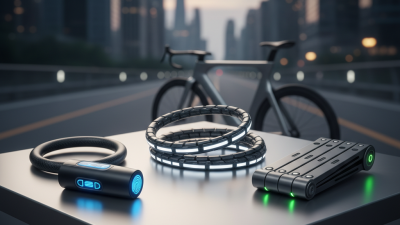
Electronic or Smart Lock 0.7–2.0 kg Varies by Construction App, keypad, proximity credential, or electronic key system Physical security still depends on the shackle, chain, or cable; electronics do not replace hardened metal. Users who value access sharing, activity alerts, or keyless convenience. Check mechanical override protection, battery backup, weather resistance, offline operation, and whether the lock can be opened without a phone signal. Choose a model with strong physical hardware and a reliable emergency-access method. Do not rely on connectivity alone.

Selection note: Security levels are practical comparisons rather than a universal grading system. Before buying, verify the lock’s current independent test rating, shackle or chain material, locking-point design, cylinder protection, weather resistance, and the manufacturer’s replacement-key policy. Typical weights vary by size and construction.

Choosing, Using, and Maintaining Your Bike Cycle Lock

How to Choose the Best Bike Cycle Lock in 2026?

Choosing, Using, and Maintaining Your Bike Cycle Lock

A good bike cycle lock should match your parking routine, bicycle value, and local theft risk. In my experience, a hardened U-lock offers strong resistance and stays dependable in wet weather. A folding or chain lock may provide more reach, but heavier designs can be difficult to carry daily. Check the lock’s construction, shackle thickness, locking mechanism, and independent security testing. Marketing language alone proves very little.

Fit matters as much as strength. Choose a lock that secures the frame and rear wheel to a fixed, approved rack. Leave minimal space inside the lock, because extra room can make leverage easier. Keep the lock above ground, where tools have less support. Use it in visible places with steady foot traffic. Never rely on a thin cable alone for overnight parking.

Small habits protect the mechanism. Wipe away grit after riding through rain, then apply a lubricant made for locks. Do not force a key when the cylinder feels stiff. Inspect the shackle for cuts, bending, or deep corrosion every few weeks. Replace damaged hardware promptly. I have sometimes chosen convenience over a safer parking spot, and that was a poor decision. Carrying a heavier lock can be annoying. Losing a bicycle is worse. Keep a spare key securely at home, and record its identification details before they fade.