Choosing the right Lock Bike Chain supplier requires more than comparing prices on a spreadsheet. Global buyers need dependable products, clear communication, and evidence of consistent manufacturing quality. A strong supplier should explain chain materials, link dimensions, coating options, lock mechanisms, and expected service conditions. These details matter when the chain faces rain, road dust, repeated bending, and daily handling.
This guide introduces leading Lock Bike Chain suppliers for international purchasing teams, distributors, retailers, and bicycle brands. It focuses on practical evaluation points, including factory experience, production capacity, quality-control procedures, sample testing, packaging, and export support. Buyers should request product samples before placing large orders. A chain may look strong in photographs but feel stiff or poorly finished in hand.
Look closely.
Reliable suppliers can provide inspection records, material information, and realistic delivery schedules. They should also discuss customization without making exaggerated promises. Certifications and test reports must be checked against the destination market’s requirements. Standards differ across regions, and assumptions can create expensive delays. This article also considers communication speed, minimum order quantities, replacement policies, and after-sales support.
No supplier is perfect. Even experienced factories may face material shortages or seasonal production pressure. The better partner is usually the one that explains risks early and offers workable solutions. Buyers should compare evidence, not confident language alone. With careful research, global purchasers can build safer sourcing decisions, reduce quality surprises, and develop long-term supplier relationships.
A top lock bike chain supplier offers more than a strong-looking chain. It provides tested materials, traceable production, and clear performance data. PeopleForBikes reported that 112 million Americans rode bicycles in 2022. This participation figure shows why dependable security products matter across retail and commercial channels.
Material choice is an early checkpoint. Hardened alloy steel, corrosion-resistant coatings, and controlled heat treatment should appear in the technical file. Suppliers should disclose chain diameter, tensile strength, lock mechanism, key tolerances, and salt-spray results.
Compliance with relevant standards, such as EN 15496, adds useful evidence. However, a certificate alone is not proof of real-world durability. That point is easy to overlook.
Reliable suppliers also manage practical details. They maintain batch records, inspect welds, test multiple samples, and explain failure rates honestly. A 2024 Grand View Research report identified security and convenience as important themes in the wider bicycle accessories market. Buyers should therefore review packaging, replacement keys, lead times, minimum order quantities, and warranty handling.
Ask for recent test reports, not polished promises. In my sourcing reviews, small gaps often appear in corrosion testing or key consistency. That deserves reflection.
A supplier willing to disclose weaknesses may be more trustworthy than one claiming perfect performance.
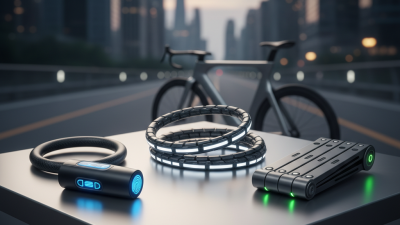
Top lock bike chain suppliers serve global buyers with products designed for commuting, storage, and fleet management.
Their main offerings include hardened steel chain locks, integrated padlock chains, and compact combination models. Hardened links resist cutting better than ordinary steel. A protective nylon sleeve helps prevent frame scratches and reduces outdoor wear.
Thick chain links increase resistance, but they add weight. Keyed cylinders often provide stronger security than basic combination mechanisms.
Leading suppliers also focus on practical security features. Some models include anti-pick designs, dust covers, sealed keyways, and corrosion-resistant coatings. Longer chains can secure two bicycles or attach them to wider posts. However, extra length may become difficult to carry. Buyers should check link diameter, lock weight, cylinder quality, and replacement-key availability before ordering.
Tips:
Ask suppliers for material specifications, independent test information, and clear warranty terms. Confirm packaging language, sample approval, and delivery conditions. Test the lock outdoors if possible, especially after rain and dust exposure. A bright sleeve improves visibility, but it does not prevent theft. No chain is completely immune to determined attacks. I have seen buyers overvalue thickness and ignore the locking mechanism. That mistake can weaken an otherwise solid product. Choose security according to location, parking time, bicycle value, and daily carrying needs.
Evaluating a bike chain supplier requires more than comparing prices. Inspect material specifications, tensile strength reports, and corrosion-resistance test results. Reliable suppliers should explain their steel grade, heat-treatment process, and plating thickness clearly. Ask for recent batch samples, not only polished catalog photographs. Check whether chain dimensions match recognized bicycle standards and your lock design. Small measurement errors can affect smooth movement and security.
Request factory audit records, production capacity details, and traceability documents. A dependable supplier can identify the mill, production date, and inspection process for each batch. Communication also matters. Replies should be specific, consistent, and supported by evidence. During sample testing, measure pin movement, joint flexibility, surface finish, and resistance to repeated pulling. Test under rain and dust conditions when possible. Laboratory results help, but practical handling reveals problems faster. I once trusted an impressive strength claim without checking the testing method. That mistake delayed a shipment.
Tips: Compare at least three samples. Record every measurement. Ask who performed each test. Review failure rates, packaging quality, replacement policies, and delivery history. A supplier avoiding difficult questions deserves caution. Certifications may look convincing, but verify their scope and validity. Inspectors should be independent when possible. Even experienced buyers can overlook inconsistent links between batches. Reliability is not proven by one successful order; it develops through repeat inspections, honest reporting, and corrective action.
Global buyers should evaluate lock bike chain suppliers beyond price and plating. The 2024 CONEBI European Bicycle Industry and Market Profile reported about 14.7 million bicycles sold in Europe during 2023. That volume increases pressure on suppliers to provide stable capacity, replacement parts, and traceable production records. Ask for recent tensile, corrosion, cutting, and key-cycle test reports. Factory photographs help, but controlled audits reveal more.
Certification must match the destination market. EN 15496 offers a useful reference for bicycle lock performance, while ISO 4210-2 supports broader bicycle safety discussions. It does not replace lock-specific testing. For European sales, suppliers should document material composition, chemical restrictions, packaging information, and traceability under applicable product-safety rules. US shipments also require clear importer records and reliable incident procedures. Compliance is a process, not a logo.
UN Comtrade data for HS 7315 shows that global chain trade covers many industrial products, so customs classification needs careful review. A supplier’s quotation should state chain material, coating, net weight, carton dimensions, and declared code. Request samples from different production lots. Small differences matter. In practice, buyers sometimes trust one impressive sample too quickly. That is a weakness worth admitting. Independent laboratory verification, batch coding, and a written corrective-action process provide stronger evidence than certificates alone.
The chart presents the typical three-year surveillance cycle used for ISO 9001 and ISO 14001 management-system certifications: initial certification, annual surveillance reviews, and recertification. Global buyers should verify the certificate scope, issuing body, expiration date, audit status, and product-specific requirements such as REACH, RoHS, or applicable market safety rules before approving a lock bike chain supplier.
Top Lock Bike Chain Suppliers for Global Buyers
International ordering starts with a measurable specification, not a colorful catalog. Request chain length, link diameter, working load, tensile strength, coating type, and lock-cylinder details. Ask for batch test reports and product photos beside a ruler. The World Bank’s 2023 Logistics Performance Index evaluates 139 economies, highlighting customs, tracking, and delivery reliability. These factors can matter more than a low factory quotation. A supplier with clear export documents usually creates fewer delays.
Pricing should include more than the unit cost. Compare the lock, packaging, inspection, inland transport, insurance, and destination charges separately. Confirm whether the quotation uses EXW, FOB, or another Incoterm under the ICC Incoterms 2020 framework. Request a sample before placing a large order. It may reveal stiff links, weak stitching, or packaging that fails after rain. I would not trust a perfect spreadsheet alone.
Ocean freight remains common for heavy chain products. UNCTAD’s Review of Maritime Transport reports that maritime shipping carries over 80% of global merchandise trade by volume. Buyers should confirm carton dimensions, gross weight, pallet limits, and port availability before booking. A practical purchase order states production dates, inspection standards, replacement terms, and required documents. Leave time for customs review. I once underestimated labeling work; the goods were ready, but the shipment was not.
| Supplier Type | Typical Product Range | Indicative Unit Price | Typical MOQ | Production Lead Time | Common Materials | Lock & Security Options | Customization Capability | Export Documents | Suitable Buyer Profile |
|---|---|---|---|---|---|---|---|---|---|
| Factory Direct | Heavy-duty chain locks, folding chain locks, keyed and combination models | US$4.00–US$18.00 per unit | 500–1,000 units | 30–50 days after sample approval | Hardened steel chain, zinc alloy or steel lock body, PVC or nylon sleeve | Keyed lock 4-digit combination Anti-drill options | High; sleeve color, packaging, logo, key coding, and length may be customized | Commercial invoice, packing list, bill of lading or air waybill, certificate of origin when required | Importers, distributors, bicycle retailers, and private-label programs |
| OEM/ODM Specialist | Custom security chains designed for bicycles, scooters, motorcycles, and outdoor equipment | US$7.00–US$28.00 per unit | 1,000–3,000 units | 45–75 days, including tooling or product development | Heat-treated alloy steel, stainless-steel components, weather-resistant coatings | Re-keyable systems Dust covers Security-rated designs | Very high; product geometry, locking mechanism, branding, packaging, and testing specifications | Commercial invoice, packing list, transport document, origin documents, and test reports where applicable | Established brands, mobility companies, and buyers with engineering requirements |
| Wholesale Exporter | Ready-to-ship chain locks in standard lengths and retail-ready packaging | US$3.50–US$14.00 per unit | 100–500 units | 7–20 days if stock is available | Carbon steel or alloy steel chain, coated steel or reinforced polymer cover | Keyed lock Combination lock Basic weather protection | Medium; packaging labels and selected colors are commonly available | Commercial invoice, packing list, export declaration, and bill of lading or air waybill | Small and medium retailers, online sellers, and trial-order buyers |
| High-Security Manufacturer | Thick-chain bicycle locks for urban use, fleet parking, and high-risk environments | US$12.00–US$45.00 per unit | 200–1,000 units | 40–70 days | Hardened alloy steel, reinforced lock housings, anti-corrosion surface treatments | Anti-pick cylinder Anti-cut chain Protective key cover | Medium to high; security configuration and packaging can usually be specified | Commercial invoice, packing list, transport documents, origin certificate, and available test documentation | Security-conscious retailers, fleet operators, rental services, and institutional buyers |
| Eco-Focused Supplier | Chain locks with recyclable packaging, durable sleeves, and lower-plastic retail presentation | US$6.00–US$22.00 per unit | 500–2,000 units | 35–60 days | Recycled or recyclable packaging materials, steel chain, TPU or textile sleeve options | Keyed lock Combination lock Recyclable packaging | Medium; packaging structure, printed materials, and sleeve colors are commonly customizable | Commercial invoice, packing list, transport document, origin documents, and material declarations if requested | Environmentally focused retailers, lifestyle stores, and sustainability-led brands |
| Low-MOQ Custom Supplier | Basic to mid-range chain locks with custom labels and small-batch packaging | US$5.00–US$20.00 per unit | 50–300 units | 20–40 days for standard models | Steel chain, PVC or fabric sleeve, zinc alloy or steel lock components | Keyed lock 3- or 4-digit combination Basic dust cover | Medium; stickers, hang tags, cartons, and limited color changes are typical | Commercial invoice, packing list, and courier, air-freight, or sea-freight transport documents | Startups, promotional buyers, local retailers, and market-testing programs |
| Regional Stock Distributor | Standard chain locks held in regional warehouses for rapid replenishment | US$8.00–US$30.00 per unit | 10–100 units | 1–10 business days from warehouse stock | Steel chain, polymer sleeve, common metal lock assemblies | Keyed lock Combination lock Retail packaging | Low; usually limited to shipping labels or distributor packaging | Commercial invoice, packing list, and domestic or international shipping documents | Buyers prioritizing fast delivery, replenishment, and smaller order quantities |
| Fleet & Institutional Supplier | Uniform chain locks for bicycle-sharing programs, campuses, offices, and rental fleets | US$9.00–US$35.00 per unit | 100–1,000 units | 30–60 days | Hardened steel, weather-resistant coatings, abrasion-resistant sleeves | Key management Uniform keying Combination options | High; key system, identification labels, packaging, and mounting accessories may be specified | Commercial invoice, packing list, transport documents, origin documents, and product specifications | Universities, municipalities, bicycle fleets, rental operators, and corporate facilities |