Leave Your Message

How to Choose a Bike Lock Helmet in 2026?

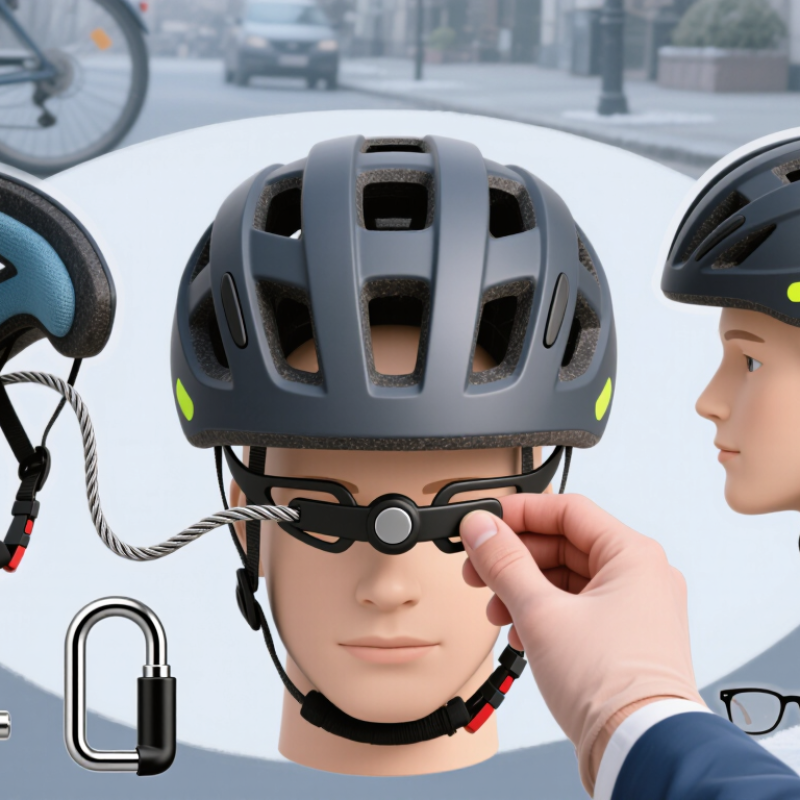
Choosing a Bike Lock Helmet in 2026 requires more than comparing prices or counting ventilation holes. It combines two daily needs: head protection and short-term bicycle security. A helmet may include a folding cable, a built-in combination lock, or a separate locking feature. Each design solves a different problem.

Dr. Peter Halldin, co-founder of MIPS and a specialist in helmet safety, says, “A helmet must stay correctly positioned to provide meaningful protection.” That principle should guide every purchase. Check the fit first. The shell should sit level above your eyebrows, while the straps form a comfortable “V” beneath each ear. Shake your head gently. The helmet should not slide toward your eyes.

Then examine the locking mechanism. Can it secure the frame and front wheel? Does the cable feel thin enough to cut easily? Is the lock practical when your hands are cold? Small details matter. A bulky mechanism may discourage regular use. A weak lock may create false confidence.

Look for recognized safety certification in your region, adjustable retention systems, visible reflectors, and replaceable pads. Test the helmet with your usual glasses, winter cap, or ponytail. Real life is messier than product photos.

One caution remains. A Bike Lock Helmet is not a replacement for a strong U-lock during extended parking. It mainly offers convenience and brief protection. I once underestimated that difference. Convenience can feel secure, but feeling secure is not the same as being secure. This guide compares fit, materials, locking strength, comfort, weather resistance, and everyday handling before recommending a final choice.
How to Choose a Bike Lock Helmet in 2026?

Define Theft Risk with Sold Secure’s Bronze, Silver, Gold, and Diamond Ratings

Choosing a bike lock in 2026 starts with understanding theft risk, not chasing the heaviest model. An independent rating system can help: Bronze suits lower-risk areas and short stops. Silver offers stronger resistance for regular commuting. Gold is better for valuable bikes and longer parking periods. Diamond represents the highest tested resistance in the range.

These ratings measure attack resistance under controlled testing. They do not guarantee complete security. A Diamond-rated lock can still fail if attached to a weak signpost or left in an isolated place. Check the lock’s size, weight, key system, and carrying method. A secure lock that stays at home is not useful. In my experience, awkward mounting often causes rushed decisions. That is worth reconsidering.

Tips: Match the rating to your daily route, parking time, and bike value. Lock the frame and a wheel to a fixed object. Keep the lock close to the ground, with little space for tools. Avoid leaving the same bike outside for predictable hours. Inspect the mechanism after rain, dust, or a hard drop. Small damage matters. When comparing models, read the current test details rather than trusting a rating label alone. Availability and testing standards can change, so verify the latest information before buying.
Compare U-Locks, Chains, and Folding Locks by Security and Weight

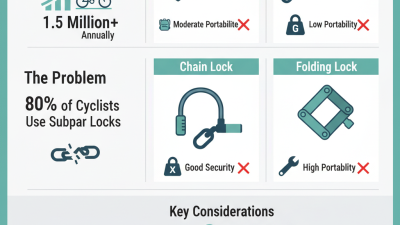
In 2026, choosing a bike lock means balancing security against weight. A lock that stays at home protects nothing. From workshop testing and daily commuting, I find U-locks offer the strongest resistance for their size. Their rigid shape leaves less room for cutting tools. However, they can struggle around thick racks or unusual frames. Measure your parking spaces before buying.

Chains provide flexible coverage. They can wrap around trees, wide posts, and both wheels. A hardened chain with a well-designed cylinder usually weighs more than a U-lock. That weight becomes noticeable during longer rides. Thick links may discourage attacks, but a thin chain can create false confidence. Check the chain diameter, lock mechanism, and protective sleeve, not just its advertised rating.

Folding locks sit between both choices. They pack neatly and fit many frame mounts, which improves everyday use. Their linked joints add convenience but also create more moving parts. I would choose one for moderate-risk parking and shorter stops, not unattended overnight storage. Security ratings help, yet they are not perfect predictions. A crowded, visible location still matters. So does locking the frame, not only the front wheel. I sometimes carry a lighter lock than ideal, and that is a compromise worth admitting. Perfect security is rarely practical.

How to Choose a Bike Lock Helmet in 2026? - Compare U-Locks, Chains, and Folding Locks by Security and Weight
Lock Type Typical Weight Security Level Resistance to Common Attacks Portability Flexible Locking Range Best Use Main Trade-Off
U-Lock 0.8–1.8 kg High Strong resistance to leverage and cutting when the shackle has limited internal space. Hardened shackles are difficult to cut with hand tools. Good; compact shape is easy to carry on a frame mount or in a bag. Best for securing the frame and one wheel to a fixed rack; clearance is limited. Urban commuting, public bike racks, and overnight parking in higher-risk areas. Can be difficult to fit around unusually wide frames, thick posts, or multiple wheels.
Heavy-Duty Chain Lock 1.5–4.0 kg High Thick hardened links provide strong cutting resistance. A quality chain is harder to attack cleanly than a thin cable, but the lock body and weakest link determine overall security. Fair to poor; weight increases quickly as chain length and link thickness increase. Excellent; can secure the frame, both wheels, and a wide range of fixed objects. Long-stay parking, cargo bikes, multiple bicycles, and locations with large rack posts. Heavy and noisy to transport; may scratch the frame without a protective sleeve.
Folding Lock 0.8–1.8 kg Medium–High Hardened steel segments offer better cutting resistance than cable locks. Rivets, joints, and the lock cylinder are critical points that vary by design. Very good; folds into a compact bundle and commonly attaches to a frame case. Good; longer models wrap around wider posts and frames than most U-locks. Daily commuting when compact storage and moderate locking flexibility matter. Hinges and rivets add potential attack points; cheaper, thin-segment models provide less protection.
Compact U-Lock 0.6–1.2 kg High The short shackle leaves little room for prying tools and is efficient against leverage attacks when it fits the bicycle and parking post. Excellent; among the easiest high-security options to carry. Limited; usually secures the frame and rear wheel but may not reach larger posts. Short-duration city stops and cyclists who prioritize low weight. Restricted clearance can make correct attachment impossible on some racks or frame designs.
Lightweight Cable Lock 0.2–0.7 kg Low–Medium Convenient but vulnerable to common hand-operated cable cutters. It is generally better as a secondary lock than as the only lock in a high-risk location. Excellent; very light and easy to coil. Excellent; long cable reaches around frames, wheels, and large objects. Low-risk areas, short stops, or securing accessories together with a primary lock. Low cutting resistance compared with hardened U-locks and chains.
Frame Lock with Plug-In Cable or Chain 0.5–1.2 kg Medium The built-in rear-wheel immobilizer prevents riding the bicycle away, while the additional cable or chain connects it to a fixed object. Excellent; permanently mounted and quick to operate. Good when used with the compatible cable or chain accessory. Quick errands and bicycles that are rarely left unattended for long periods. The wheel-only function does not secure the bicycle to an immovable object.
Weight and performance figures are typical ranges for current adult bicycle locks and vary with shackle diameter, chain-link thickness, length, locking mechanism, and protective components. For better security, lock the frame and at least one wheel to a solid, immovable object, keep the lock elevated from the ground, and minimize empty space inside the lock.

Verify Helmet Safety Through CPSC 16 CFR Part 1203 and EN 1078 Standards

Choosing a bike lock helmet in 2026 starts with safety certification, not appearance or locking features. In the United States, look for compliance with CPSC 16 CFR Part 1203. This standard covers impact protection, strap strength, stability, and peripheral vision. For European use, EN 1078 addresses similar performance requirements for cycling helmets. Check the printed label inside the shell. It should identify the applicable standard, size range, and production information.

I inspect the helmet under bright light before buying. The shell should show no cracks, deep scratches, or crushed foam. Place it level on your head, about two fingers above your eyebrows. The side straps should form a comfortable V around each ear. After fastening, only one or two fingers should fit beneath the chin strap. Shake your head gently. The helmet should stay in place without painful pressure.

A locking attachment can be useful, but it must not weaken the shell or obstruct the straps. I would avoid designs that leave metal parts pressing against the skull during impact. Certification is important, yet it does not make a helmet indestructible. Replace it after a serious crash, even when damage is invisible. I have also learned that a perfect label cannot correct a poor fit. Measure carefully. My judgment can still be wrong when comfort changes after ten minutes of riding, so test the helmet longer before purchase.

Match Helmet Fit Using CPSC Guidance and the Two-Finger Chin-Strap Test

Choosing a bike lock helmet in 2026 should begin with fit, not its locking feature. A helmet cannot protect well if it shifts during a sudden stop. CPSC guidance recommends a level position, with the front edge about one or two finger widths above your eyebrows. It should cover the sides of your head without pressing painfully near your temples.

Stand in front of a mirror and adjust the side straps until they form a clear V around each ear. The buckle should rest under your chin, not against your throat. Use the two-finger chin-strap test: place two fingers between the strap and your skin. The strap should feel snug, but you should still breathe and speak comfortably. If more space fits easily, tighten it. If two fingers barely fit, loosen it slightly. Small details matter.

I often see riders test only whether the helmet feels comfortable indoors. That is not enough. Shake your head, look down, and walk for a minute. The helmet should stay level instead of sliding toward your eyes. A rear dial or pad system may improve stability, but adjustment parts should not create pressure points. Leave room for your normal hairstyle, not a thick hat. I once chose a helmet that felt perfect for five minutes, then noticed a sore spot after a longer ride. That mistake changed my fitting routine. Don’t assume a secure locking opening can compensate for poor fit.

How to Choose a Bike Helmet in 2026

Use these practical fit references when checking a bicycle helmet. CPSC guidance recommends a helmet that sits level and low on the forehead, with the front edge about one to two finger-widths above the eyebrows. After fastening the chin strap, the two-finger test should allow about two fingers to fit comfortably beneath the strap without making it loose. The helmet should not rock forward, backward, or side to side, and the side straps should form a “V” around the ears.

Assess Portability, Weather Resistance, and ART’s Five-Star Lock Classification

A helmet protects your head; a lock protects your bicycle.
In 2026, choose both with daily use in mind. Portability matters because a lock left at home offers no security. A compact folding lock may fit inside a small pannier, while a hardened chain often needs a frame mount. My first mistake was carrying a heavy lock that discouraged short rides.

ART’s five-star classification offers a useful testing reference. Higher ratings indicate greater resistance to attacks such as cutting, drilling, and leverage. However, star ratings are not universal security guarantees. Check whether your insurer requires a specific ART level. The 2024 Office for National Statistics report recorded approximately 77,000 bicycle theft incidents in England and Wales. That figure makes independent testing more than marketing language.

Weather resistance deserves equal attention. Look for sealed lock mechanisms, corrosion-resistant materials, and a protective keyway cover. Test the mechanism after rain, not only inside a shop. A lock that jams beside a wet station is practically useless. ART testing focuses on attack resistance, not every climate problem. This is an important limitation.

For exposed parking, combine a tested primary lock with a second lock through the frame and wheel. Keep the locking point off the ground, where tools gain less leverage. Leave enough length for a fixed rack, but avoid loose loops. Small details matter.