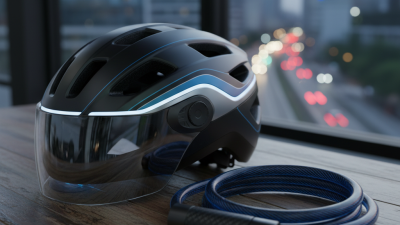
China Best Bike Lock And Helmet Manufacturers?
Choosing China’s best Bike Lock And Helmet manufacturers requires more than comparing catalog prices. It requires evidence, testing, and careful factory conversations. Commercial research from Grand View Research and Mordor Intelligence shows continued growth in bicycle safety equipment, supported by urban cycling, e-bike adoption, and safety awareness. Yet market forecasts are not purchasing proof. They only show opportunity.
A reliable manufacturer should explain its materials, testing process, and quality controls clearly. For locks, ask about hardened steel, cylinder resistance, corrosion testing, and independent security ratings such as Sold Secure or ART. For helmets, inspect shell construction, impact liners, retention systems, ventilation, and compliance with standards such as EN 1078, CPSC 16 CFR 1203, or AS/NZS 2063. Certification documents should match the exact model, not merely the factory’s general product range. This detail matters.
Look closely.
Professional buyers should review audit records, sample consistency, complaint rates, packaging protection, and production capacity. The China Bicycle Association and international safety guidance both emphasize quality management as cycling demand expands. Supplier experience also matters during mold changes, seasonal orders, and urgent corrections. A strong factory can provide test samples, traceable batches, and realistic delivery schedules.
Still, no manufacturer is perfect. A polished showroom may hide weak final inspection. A low quotation may exclude testing, tooling, or proper packaging. Buyers should compare several factories and verify claims through independent laboratories where possible. The best partnership combines engineering knowledge, transparent communication, responsible sourcing, and continuous improvement. That standard helps distributors select Bike Lock And Helmet products that perform beyond photographs and sales promises.
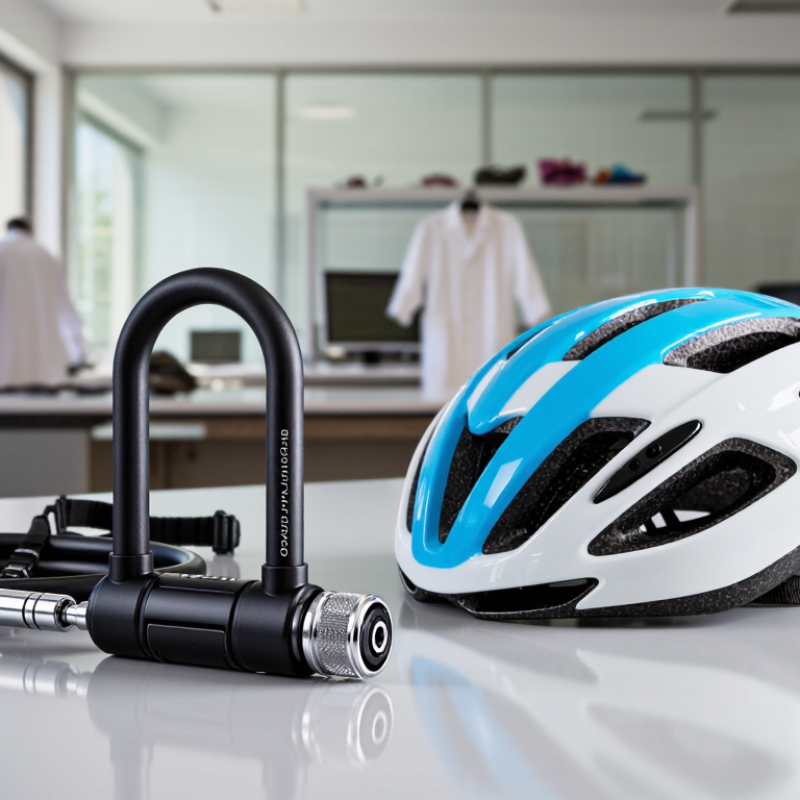
China’s Bike Lock and Helmet Industry: Standards, Scale, and Market Data
China’s bike lock and helmet industry is large, export-driven, and increasingly specification-focused. The China Bicycle Association reported roughly 58 million bicycle exports in 2023, showing strong manufacturing depth. This scale supports metal processing, injection molding, foam forming, and impact testing in one supply network.
Helmet buyers should check GB 24427-2021, China’s standard for bicycle, skateboard, and roller-skate helmets. It covers impact absorption, retention systems, field of vision, and marking requirements. For locks, buyers should request testing details for cutting resistance, corrosion, cylinder durability, and repeated-use performance. A thick cable is not automatically secure. That assumption needs challenging.
Tips: Ask for recent test reports, material specifications, batch traceability, and factory inspection records. Confirm whether reports match the exact model.
Market data can guide sourcing, but it cannot replace product evaluation. Customs figures describe shipment volume, not durability. A 2023 industry report from the China Bicycle Association also indicated continued pressure from overseas demand changes and production costs. That matters for lead times and quality consistency. Experienced buyers should inspect samples after heat, rain, and freezing exposure. Real use is less tidy than a laboratory.
Some helmets still feel uncomfortable after ten minutes. Some locks look strong but carry weak internal parts. Independent testing remains valuable. Suppliers with ISO 9001 systems may offer better process control, yet certification alone is not proof of product performance. That distinction is easy to miss.
China’s Bicycle, E-Bike and Helmet Standards Timeline
This chart compares the publication years of selected Chinese national standards relevant to bicycle manufacturing, electric bicycles and sports helmets. GB 3565-2005 covers bicycle safety requirements, GB 24429-2009 covers sports helmet safety requirements and test methods, and GB 17761-2018 defines the safety specification for electric bicycles. The standards provide a common technical and compliance framework for manufacturers and importers in China.
Source: China National Standards platform and publicly available national standard documents.
How to Classify Chinese Bike Lock Manufacturers by Security Ratings
China Best Bike Lock And Helmet Manufacturers?
Chinese bike lock manufacturers should be classified by verified security ratings, not factory size or advertising language. The EN 15496 standard evaluates bicycle locks through corrosion, pulling, cutting, and manipulation tests. A basic supplier usually offers cable or thin-chain locks for low-risk parking. These products are light and convenient, but their protection is limited. Short-term use only.
A stronger manufacturer should provide independent test records, traceable samples, and clear production controls. The ART certification system uses a one-to-five-star scale, while the Sold Secure framework separates products into Bronze, Silver, Gold, and Diamond levels. These systems do not measure identical threats, so buyers should not compare labels casually. A practical mid-level factory may produce hardened chains, folding locks, or compact U-locks with documented cutting resistance. Test evidence matters more than a thick-looking shackle.
High-security manufacturers should show repeated batch testing, hardened steel specifications, key-cylinder evaluations, and resistance results against leverage and powered cutting tools. The 2023 European bicycle industry market reports continued to identify theft prevention as a major purchasing concern, especially in dense urban markets. However, security ratings are not permanent promises. Materials, weld quality, coating depth, and lock assembly can change between production batches. I would request third-party reports, factory audit records, and physical samples before approval. Ratings can be misunderstood. A perfect category does not exist.
How to Evaluate Helmet Makers Using GB, EN 1078, and CPSC Standards
A reliable bicycle helmet manufacturer should explain how its products meet GB, EN 1078, and CPSC requirements. These standards address impact protection, retention systems, field of vision, and construction quality. They are not interchangeable. A helmet approved for one market may need additional testing for another.
Ask for current test reports from an independent laboratory, not only factory certificates. Check the report number, model name, production date, and tested configuration. The shell, liner, buckle, and strap layout should match the samples you receive. During factory visits, inspect mold control, foam density checks, strap stitching, and final visual inspection. Small cracks or loose buckles matter. In my experience, documentation can look excellent while process control remains uneven. That is an uncomfortable detail, but it deserves attention.
Tips
Request random samples from finished cartons. Test fit across several head shapes. Record batch numbers and keep photographs. Ask how failed units are isolated and corrected. Also review the manufacturer’s complaint records and corrective actions. A serious maker can discuss mistakes without hiding behind certificates. Recheck performance after design changes, even when the product name remains unchanged. Standards provide a useful baseline, but consistent production, traceability, and honest communication reveal whether a helmet maker is dependable.
Why Testing Matters: Helmets Cut Head Injury Risk by About 50% (Cochrane)
China Best Bike Lock And Helmet Manufacturers?
Helmet testing is not a marketing detail. It is a safety decision. The Cochrane systematic review examined 40 studies involving more than 64,000 injured cyclists. It found that helmets reduced the risk of head injury by about 69%. This is stronger than the commonly repeated “about 50%” message. The World Health Organization also reports that helmets can reduce serious head and brain injuries by roughly 63% to 88%. Results vary by crash type, helmet design, and correct use.
For manufacturers, reliable testing should cover impact absorption, strap strength, retention, and fit stability. A helmet may look solid on a showroom shelf. It can still fail after poor adjustment or long exposure to heat. Independent laboratories should verify test methods and publish clear performance records. The U.S. Consumer Product Safety Commission requires bicycle helmets to meet federal safety standards, but certification is not the same as perfect protection. That distinction matters. I have seen riders choose a lock carefully, then wear a loose helmet. Safety habits are rarely consistent.
Tips: Choose a helmet that sits level and covers the forehead. Keep the straps snug under the chin. Replace it after a serious impact, even without visible cracks. For bike lock makers, pair strong materials with practical handling. A lock that is too heavy may stay at home. That weakens real-world protection.
A Step-by-Step Comparison of China’s Best Lock and Helmet Manufacturers
Choosing China’s best bike lock and helmet manufacturers requires more than checking factory photos. A practical comparison starts with product purpose, materials, testing, and after-sales support. For locks, inspect hardened steel thickness, cylinder smoothness, coating quality, and resistance to cutting or prying. For helmets, check shell construction, impact-absorbing foam, strap strength, ventilation, and size adjustment.
Ask each manufacturer for recent test reports, production photos, and quality-control records. Reliable suppliers should explain where materials come from and how defective units are handled. Request samples before placing a large order. I once found a lock that looked solid but had a stiff key mechanism after several rainy days. That small detail changed my evaluation. It reminded me that polished samples can hide practical weaknesses.
Tips: Compare at least three factories using the same checklist. Test locks outdoors, not only on a showroom table. Wear helmets for thirty minutes to check pressure points and heat buildup. Confirm labeling, packaging, and inspection procedures before production. Clear communication matters. However, English messages can still create confusion, so use drawings, measurements, and signed specifications. A low quotation may reflect thinner materials, weaker testing, or slower support. Do not judge price alone. Some suppliers provide impressive documentation but inconsistent batch quality, which deserves careful follow-up.