Top 10 Essential Tips for Choosing the Best Bike Lock and Helmet
When it comes to cycling, ensuring the safety of both the rider and the bike is paramount. With the rising number of bicycle thefts—over 1.5 million bikes reported stolen in the U.S. alone each year—the importance of choosing the right Bike Lock and Helmet cannot be overstated. According to a recent report by the National Bicycle Dealers Association, nearly 40% of cyclists have experienced bike theft, highlighting a pressing need for secure and reliable locking mechanisms.
Experts in the field, like Dr. Richard Anderson, a renowned safety analyst in cycling gear, emphasize that "investing in a high-quality bike lock and helmet is not just about complying with safety regulations; it's about giving cyclists the confidence to ride without fear." This sentiment reflects the broader truth that proper equipment can enhance the cycling experience, allowing individuals to focus on enjoyment rather than security concerns.
As we navigate the nuances of selecting the best Bike Lock and Helmet, various factors such as materials, locking mechanisms, and safety certifications come into play. Understanding these essentials can greatly influence a cyclist's decision-making process, ultimately contributing to a safer and more enjoyable ride.
Understanding Different Types of Bike Locks and Their Security Levels
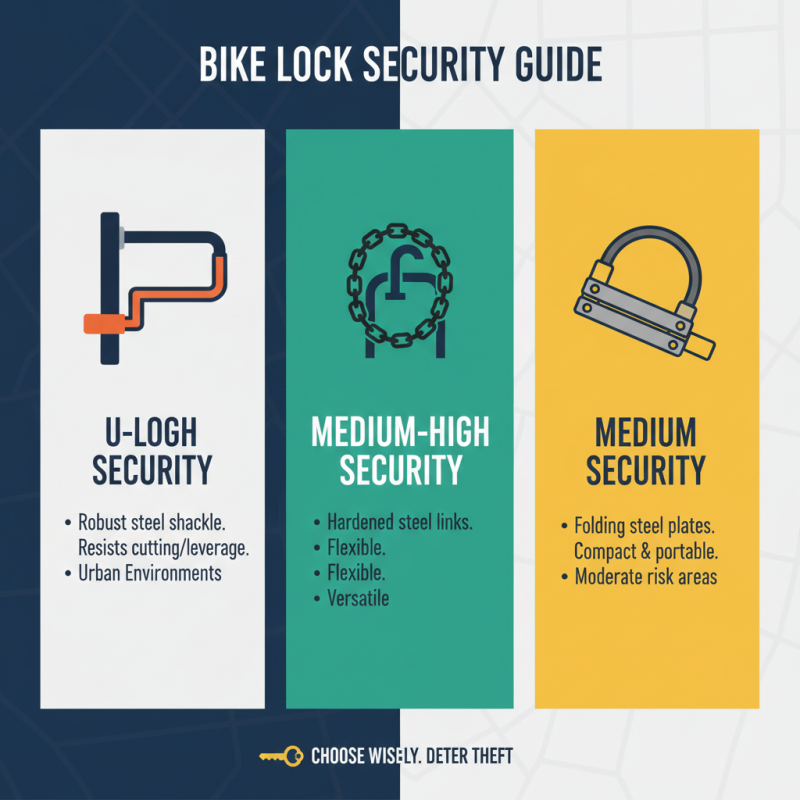
When selecting a bike lock, understanding the different types and their corresponding security levels is crucial for discouraging theft. Primarily, there are three main categories of bike locks: U-locks, chain locks, and folding locks. U-locks are known for their robust construction and relatively lightweight design, making them a popular choice among cyclists who prioritize security. Their rigid structure often resists cutting and leverage attacks, offering a high level of security for urban environments.
Chain locks, though heavier, provide versatility due to their length, allowing for securing multiple points of the bike or even several bikes together. The security level of chain locks largely depends on the thickness and material of the links; opting for hardened steel chains can provide enhanced resistance against various forms of tampering. On the other hand, folding locks offer a blend of portability and security. Composed of linked metal plates, they can be compactly folded when not in use. However, due to their design, they may not always reach the same security ratings as U-locks or high-quality chain locks. Understanding these variations and assessing the level of threat in your area can greatly assist in choosing the most suitable lock to keep your bike secure.
Key Features to Look for When Choosing a Helmet for Cycling Safety
When selecting a helmet for cycling safety, it is crucial to focus on several key features that can significantly enhance your protection on the road. First, look for a helmet that meets safety standards established by organizations such as the CPSC or EN 1078. These certifications ensure that the helmet has undergone rigorous testing to withstand impacts. Additionally, consider the construction material; helmets made from expanded polystyrene (EPS) foam provide excellent shock absorption and durability, which are essential for effective protection during a fall or crash.
Another important feature to consider is the fit and comfort of the helmet. A proper fit is vital; it should sit level on your head and not move when shaking. Many helmets come with adjustable straps and padding to accommodate different head shapes and sizes. Ventilation is also key, especially for long rides in warm weather. Look for models with multiple vents to help keep your head cool while riding. Finally, reflective elements can enhance visibility during low-light conditions, adding an extra layer of safety. By prioritizing these features, you can select a helmet that not only fits well but also provides the protection needed for a safe cycling experience.
How to Assess the Durability and Resistance of a Bike Lock
When choosing a bike lock, assessing its durability and resistance is crucial to safeguarding your bicycle from theft. Start by examining the material used in construction. High-quality locks are often made from hardened steel, which provides superior resistance to cutting and tampering. Look for locks that have a thicker cross-section, as they generally withstand forceful attempts to break them more effectively. Additionally, the locking mechanism plays a vital role; complex locking mechanisms with multiple internal components are typically harder for thieves to manipulate.
Another important factor is the lock's resistance to environmental elements. Ensure it has a weather-resistant coating or sealing to prevent rust and corrosion over time, which can compromise its integrity. Furthermore, consider features like anti-drill plates and anti-pick technology, which enhance security against sophisticated theft methods. Ultimately, a lock that combines durability with multiple layers of resistance is integral to ensuring the long-term safety of your bicycle.
Tips for Proper Use and Maintenance of Your Bike Lock and Helmet
When it comes to maintaining the security of your bike, proper usage and maintenance of your bike lock and helmet are paramount. According to a report by the Bureau of Justice Statistics, about 1.5 million bicycles are stolen each year in the United States alone. This statistic underscores the importance of not only choosing the right lock but also knowing how to effectively use it. For instance, always lock your bike in a well-lit, busy area and ensure that your lock goes through both the frame and a secure part of the bike. Regularly check your lock for wear and tear, as a damaged lock can compromise your bike's security.
Equally important is the care of your helmet, which significantly reduces the risk of head injuries in accidents. A study by the Bicycle Helmet Safety Institute revealed that helmets can reduce the risk of serious head injuries by 85%. To ensure that your helmet functions effectively, store it away from extreme temperatures and UV light, as exposure can lead to deterioration of the materials. Additionally, replace your helmet every three to five years or after any impact, as the protective foam may be compromised after a fall. By adhering to these practices, cyclists can enhance their safety and protect their investment more effectively.
Top 10 Essential Tips for Choosing the Best Bike Lock and Helmet
This bar chart illustrates the importance ratings (on a scale of 1 to 10) for various criteria when choosing the best bike lock and helmet. Each criterion impacts the user's decision significantly, particularly durability and safety ratings.
Safety Standards and Certifications for Bike Locks and Helmets Explained
When selecting the best bike lock and helmet, understanding the
safety standards and
certifications is crucial. For bike locks, look for certifications from
organizations like Sold Secure or
ART, which evaluate the security
level of locks based on real-world breaking techniques. A recent report
indicated that using a lock that meets these standards can reduce theft
risk significantly, with some high-security models boasting a success
rate of preventing theft in over over 90%
of attempts.
For helmets, certifications from the Consumer Product Safety Commission (CPSC)
in the U.S. or the European EN 1078 standard are essential indicators of quality.
These certifications ensure that helmets have passed rigorous impact tests
and are designed to absorb energy during a collision. In fact, studies
reveal that wearing a certified helmet can reduce the risk of head injury by
up to 70%.
When choosing a bike lock, consider the material and design; heavy-duty
U-locks or chains made from hardened
steel are generally more secure than lighter options. Additionally, ensure
you select a helmet that fits properly, as a good fit is vital for effectiveness.
Demonstrating commitment to safety by adhering to these standards not only
enriches your biking experience but also instills confidence
in your equipment.