How to Choose the Best Bike Lock for Maximum Security?
Choosing the right bike lock is crucial for any cyclist. A good lock protects your bike from theft. With various options available, finding the best bike lock can be overwhelming. Understanding the types, materials, and security features is essential.
Many bike locks may seem similar at first glance, but their effectiveness varies greatly. Some locks offer robust security, while others fall short. It’s important to consider how often you park your bike in high-risk areas. A flimsy lock can lead to regrets later. Think about the size, weight, and ease of use as well.
Not all locks are created equal. Price does not always reflect security. Reading reviews and seeking expert advice can help narrow down your choices. Investing in a high-quality bike lock is worth it. A well-chosen lock provides peace of mind and protects your investment.
Factors to Consider When Choosing a Bike Lock: Security Ratings and Types
When selecting a bike lock, understanding security ratings and types is crucial. The most recognized standard is the Sold Secure rating. This categorizes locks into gold, silver, and bronze levels. Gold-rated locks withstand significant force and are ideal for high-risk areas. According to a report from the National Bicycle Theft Prevention Program, locations with high bike theft rates demand locks that meet or exceed gold standards.
Beyond ratings, the type of lock plays an essential role. U-locks provide a robust defense against cutting and leverage attacks. Chain locks offer versatility in securing your bike to various objects while maintaining a decent security rating. A 2022 security survey indicated that bike owners using U-locks experienced 70% fewer thefts than those using lower-rated locks. Moreover, the material matters; hardened steel tends to resist tools better than other metals.
However, even the best locks have vulnerabilities. As thieves evolve, so do their methods. Inconsistencies in usage also emerge; many cyclists forget to secure both the frame and the wheels. It's essential to stay informed about emerging security technologies. Unlocking the best practices in bike lock usage can dramatically lower theft risks. Consider your environment and make a well-informed choice that suits your needs.
How to Choose the Best Bike Lock for Maximum Security?
| Lock Type |
Security Rating |
Weight (lbs) |
Price Range ($) |
Pros |
Cons |
| U-Lock |
High |
3.5 |
50-150 |
Very secure, lightweight |
Limited locking area |
| Chain Lock |
Medium |
6.0 |
30-100 |
Versatile, larger locking area |
Heavier, may be cumbersome |
| Folding Lock |
Medium-High |
3.0 |
80-200 |
Compact, easy to carry |
Can be less secure than U-locks |
| Cable Lock |
Low |
1.5 |
10-30 |
Lightweight, flexible |
Easily cut, low security |
Understanding Lock Security Ratings: The Role of Sold Secure and ART
When selecting a bike lock, understanding security ratings is crucial. Two reputable standards in the industry are Sold Secure and ART. Sold Secure categorizes locks into different levels based on their performance against various attack methods. This system provides clear guidance on which locks offer higher levels of security. ART ratings, originating from the Netherlands, also focus on the lock's resistance to tampering. Both systems aim to help consumers make educated choices.
Many riders overlook the significance of these ratings. It's tempting to choose a lock based on price alone. However, a cheap lock with no certification could lead to an expensive loss. High-security locks often come with a heftier price tag but can save you from the heartache of theft. Understanding the rating systems helps in balancing cost and security effectively while also considering the environment where the bike will be stored.
Remember that no lock is entirely theft-proof. Environment and public visibility play vital roles in overall security. While a high-rated lock provides better protection, using it correctly is equally important. Always secure your bike to an immovable object. Overall, be thoughtful about your choices and remain aware of your bike’s security at all times.
Comparing Different Lock Types: U-locks, Chain Locks, and Folding Locks
Choosing the right bike lock is crucial for keeping your bicycle safe. When comparing lock types, U-locks, chain locks, and folding locks each offer unique advantages and drawbacks.
U-locks are compact and provide solid security. Their rigid design makes them hard to maneuver with tools. However, they may struggle with securing larger frames or multiple bikes.
Chain locks, on the other hand, offer versatility. They can wrap around various objects, making them easier to use in different situations. Yet, their weight can be a drawback for daily commuters. Cheaper models may not provide sufficient security, so it’s essential to assess material quality. Folding locks present a blend of portability and flexibility, but they often have a limited locking range compared to U-locks and chains.
Evaluating these options is vital. Consider your routine and where you park. A U-lock might work well in high-crime urban areas, while a chain lock could suffice in safer neighborhoods. Remember, no lock is entirely theft-proof. Even the best locks can be compromised in skilled hands. Regularly reassess your choice and stay informed about evolving security measures. That way, you can enhance your bike's protection effectively.
Evaluating Durability and Weather Resistance in Bike Locks
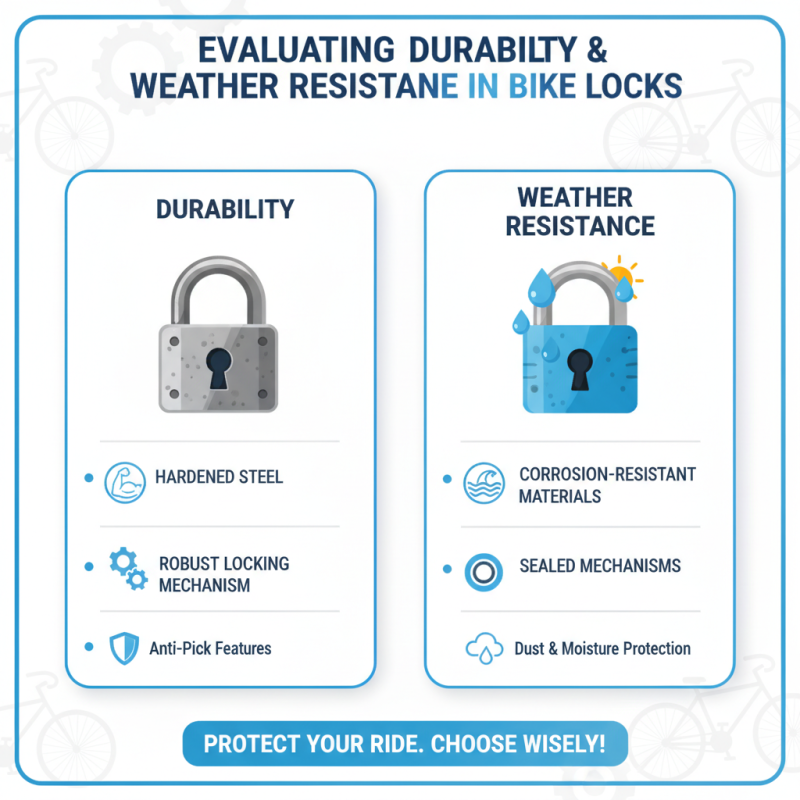
When selecting a bike lock, durability and weather resistance are crucial factors to consider. A durable lock can withstand physical attacks. Look for locks made from hardened steel, which offers greater protection against cutting and hammering. Additionally, a robust locking mechanism is essential. Aim for options that have anti-pick features to deter unwanted tampering.
Weather resistance is equally important. Locks that face harsh rain, snow, or humidity can rust and deteriorate quickly. Choosing locks with a protective coating helps guard against rust. It’s also wise to consider seals that prevent dirt and debris from entering. Regular maintenance is a must. Check for signs of wear and keep the lock clean.
Despite advancements, no lock is perfect. Each option may have weaknesses. Some may be heavy or cumbersome to carry. Others may have limitations in extreme conditions. It’s all about finding the right balance between security, convenience, and resilience. Evaluate where you usually park your bike. This reflection can lead to better choices in lock selection.
Installing Your Bike Lock Properly for Enhanced Security
Installing a bike lock properly is crucial for securing your bicycle. First, choose a sturdy location. Look for fixed objects like bike racks or lampposts. Always ensure they are immovable. Avoid locking your bike to something that can be easily cut or broken.
Tip: Position your lock at a height. This makes it harder for thieves to use tools to access the lock. A high lock also prevents it from being hidden from view. Always lock through the frame and at least one wheel. This reduces the chances of your bike being stolen.
Check that your lock is snug but not overly tight. A loose lock can rattle and draw attention. If you notice signs of wear, consider replacing it. Regularly inspect the lock for any damage. Addressing issues quickly can prevent a potential theft.
Tip: Rotate your locking routine. By changing where and how you lock your bike, you decrease predictability. Thieves often watch for patterns. Being vigilant and proactive in your approach is essential.